
Latest Anti Snoring Devices That Might Finally Save Your Marriage
Snoring Is Ruining More Than Just Your Sleep
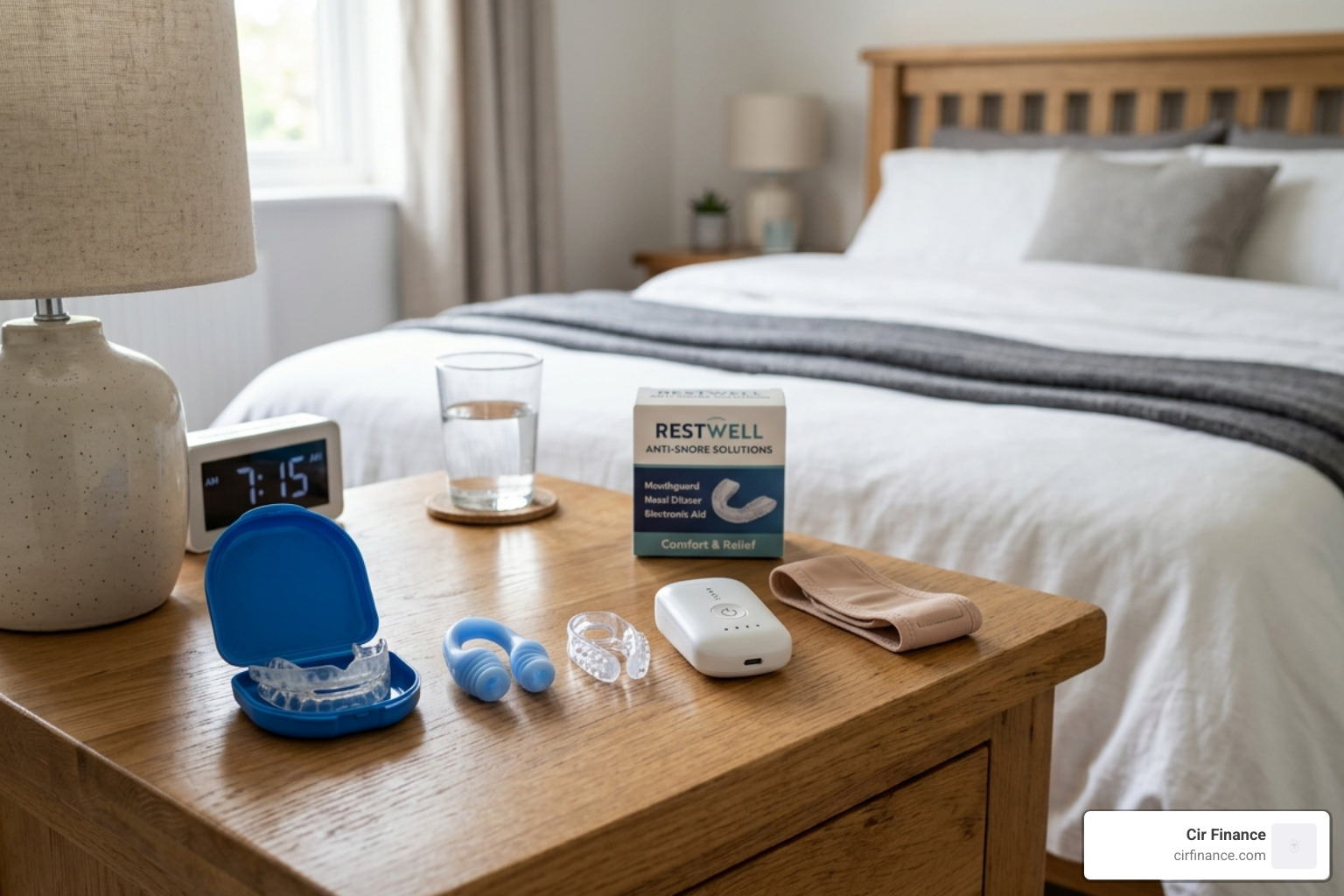
Anti snoring gadgets are devices designed to stop or reduce snoring by keeping your airway open while you sleep. Here are the most effective types available in 2026:
| Device Type | Best For | Price Range |
|---|---|---|
| Mouthpiece (MAD) | Jaw/throat snoring | $30–$170 |
| TENS device | Tongue-based snoring | $100–$200 |
| Nasal strips/dilators | Nasal congestion snoring | $10–$30 |
| Chin strap | Mouth breathing snoring | $15–$40 |
| Tongue stabilizer | Tongue fallback snoring | $30–$100 |
If you’ve ever been elbowed awake at 2 AM — or are the one doing the elbowing — you already know how bad snoring can get.
It’s not just noise. Chronic snoring disrupts sleep cycles, leaves both partners exhausted, and puts real strain on relationships. In some cases, it’s also a warning sign of something more serious, like sleep apnea or elevated blood pressure.
The good news? The market for anti snoring tech has come a long way. There are now devices backed by clinical trials, FDA clearance, and real user data — not just late-night infomercial promises.
The challenge is figuring out which one actually works for your type of snoring.
This roundup breaks down the best options available right now, what the evidence says, and how to choose the right device without wasting money on something that ends up in a drawer.
Understanding the Root Causes of Nighttime Noise
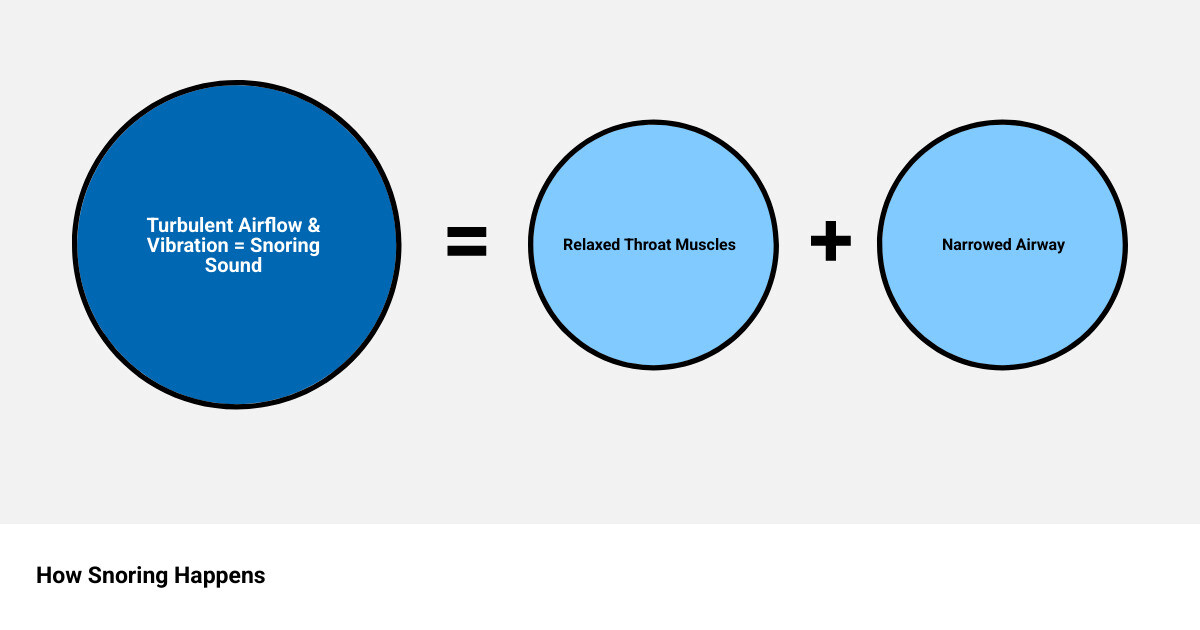
Before we can find the right anti snoring gadget, we have to understand why the “chainsaw” starts in the first place. At its core, snoring is a physics problem. When we fall asleep, the muscles in our neck, tongue, and throat relax. For many of us, they relax a little too much.
As these tissues go limp, they narrow the airway. When you try to breathe through that restricted space, the air becomes turbulent, causing the soft tissues of the throat and palate to vibrate. That vibration is the sound we call snoring.
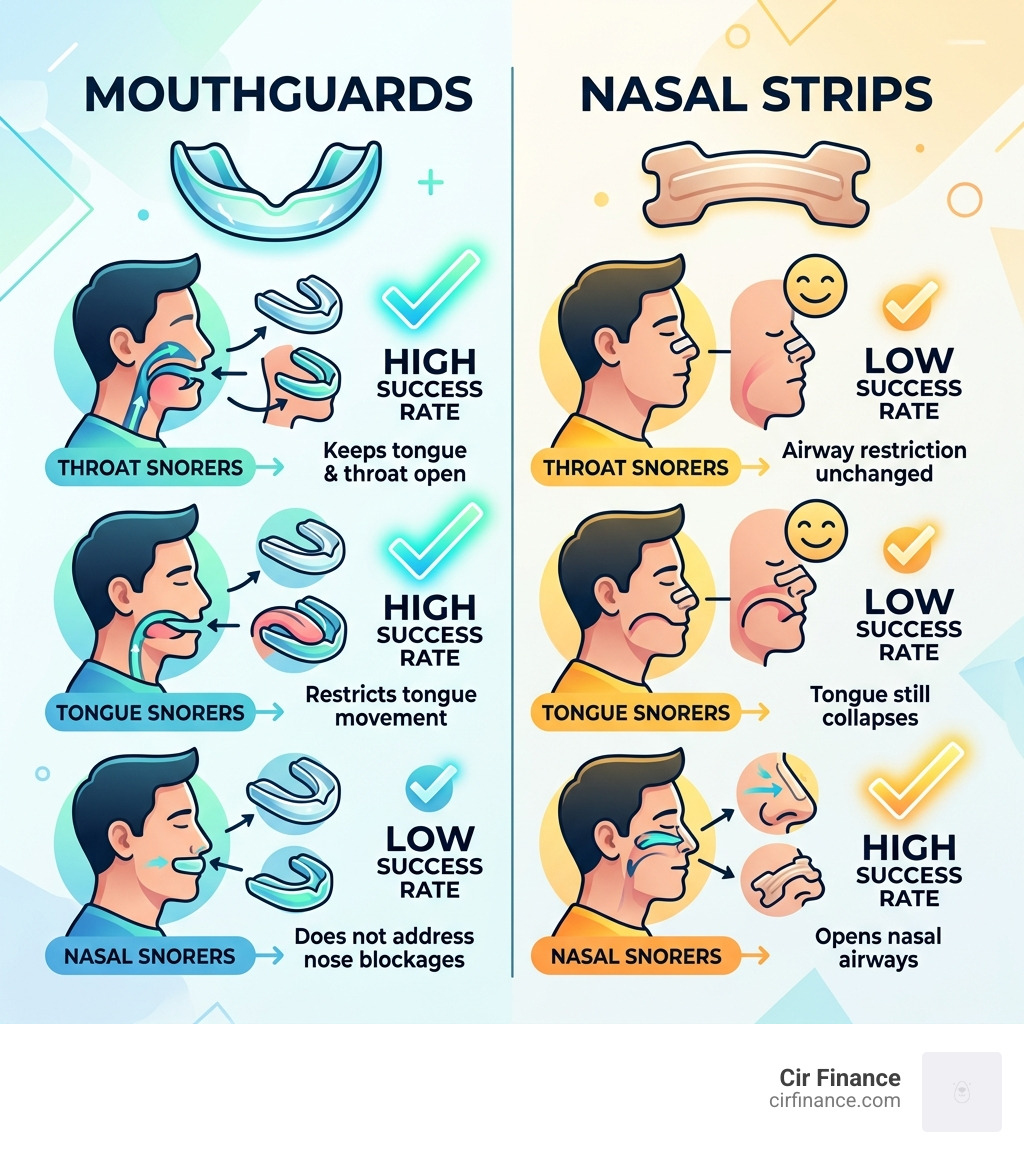
The location of the “blockage” determines what kind of device you need. If your tongue slides back and blocks the throat, a nasal strip won’t do a thing. Conversely, if your nose is stuffed up from allergies, a mouthpiece might be overkill.
| Snoring Type | Primary Cause | Recommended Solution |
|---|---|---|
| Tongue-Based | Tongue falls back into the throat | TENS devices, Tongue Stabilizers, MADs |
| Throat-Based | Soft tissue vibration in the airway | Mandibular Advancement Devices (MADs) |
| Nasal-Based | Narrow or collapsed nasal passages | Nasal strips, Dilators, Intake kits |
| Mouth-Based | Breathing through the mouth | Chin straps, Mouth tape |
Why You Snore: Finding the Right anti snoring gadget
Several factors contribute to the severity of those nightly vibrations. Muscle tone naturally decreases as we age, making the airway more prone to collapse. Anatomical triggers, such as a low, thick soft palate or enlarged tonsils, can also narrow the passage.
Lifestyle factors play a massive role too. Alcohol is a potent muscle relaxant; having a drink within three hours of bedtime almost guarantees a louder night. Weight is another factor—excess tissue around the neck puts physical pressure on the airway. Even your sleep position matters. Gravity is the enemy of the back-sleeper, as it pulls the tongue and jaw downward into the throat.
When to Consult a Professional
While an anti snoring gadget can be a marriage-saver, we must emphasize that snoring isn’t always just a “quirk.” It is often a primary symptom of Obstructive Sleep Apnea (OSA), a serious medical condition where breathing actually stops and starts throughout the night.
If you experience gasping for air during sleep, excessive daytime fatigue, or morning headaches, it’s time to see a doctor. Chronic snoring is also linked to hypertension, heart disease, and stroke. A physician may recommend a sleep study to monitor your oxygen levels and heart rate before you settle on a DIY solution.
The Best anti snoring gadget Options for 2026
The technology available in April 2026 is lightyears ahead of the simple “boil-and-bite” guards of the past. Today’s devices use clinical data and advanced materials to provide comfort without sacrificing effectiveness.
Clinically Proven Oral Appliances
One of the most recognized names in the industry is the Zyppah Anti Snoring Mouthguard. What sets this device apart is its dual-action approach. While most mouthpieces only move the jaw forward, Zyppah includes a patented “seatbelt for the tongue.”
This elastic band holds the tongue in place, preventing it from falling back into the airway. In a peer-reviewed study of 570 users, this technology was found to be 91% effective. Because it targets the tongue specifically, it addresses the root cause for the vast majority of snorers. It is FDA-cleared and made from medical-grade, BPA-free materials. You can find more details here: Zyppah Anti Snoring Mouthguard – Zyppah, Inc. or the ZYPPAH Advanced Stop Snoring Device – Zyppah, Inc..
Adjustable Custom-Fit Mouthpieces
If comfort is your primary concern, an adjustable Mandibular Advancement Device (MAD) is often the best route. The VitalSleep Snoring Device for Better Sleep is a standout in this category.
Unlike “one-size-fits-all” options that can cause significant jaw ache, VitalSleep uses a patented Accu-Adjust system. This allows you to move the lower tray forward in 1mm increments (up to 8mm total). This micro-adjustability means you only move your jaw as far as necessary to clear the airway, minimizing strain on the TMJ (jaw joint). It also features a “boil-and-bite” fitting process for a custom teeth impression and comes in separate sizes for men and women. Check out their various options:
- VitalSleep Snoring Device
- VitalSleep – Adjustable Anti-Snoring Mouthpiece
- VitalSleep – Wake Up Refreshed – Adjustable Anti-Snoring Mouthpiece
Advanced TENS Technology for Tongue Snoring
For those who find mouthpieces uncomfortable, the Zeus device represents the cutting edge of non-invasive tech. Developed in collaboration with King’s College London and the NHS, Zeus uses Transcutaneous Electrical Nerve Stimulation (TENS).
The device sits under the chin and sends gentle, intermittent pulses to the genioglossus muscle (the main muscle of the tongue). These pulses keep the muscle toned throughout the night, preventing it from collapsing. Clinical trials, including the TESLA Home Trial, have validated its effectiveness. Most users report they don’t even feel the stimulation once they fall asleep, making it a “set it and forget it” solution.
Non-Invasive Aids and Budget-Friendly Alternatives
Not every snorer needs a high-tech electronic pulse or a custom-molded guard. Sometimes, the simplest solution is the most effective, especially for nasal-based snorers.
Key Features of a High-Quality anti snoring gadget
When shopping for a budget-friendly aid, we look for three things: comfort, reusability, and material safety.
- Nasal Strips: Products like the “Intake Breathing Nasal Strip Starter Kit” (which saw over 40,000 units sold last month) use magnetic pull to lift the sides of the nose, opening the nasal valves.
- Chin Straps: Best for mouth-breathers, these keep the jaw closed. High-rated options on Amazon now have over 20,000 reviews with 4.8-star averages, proving that simple mechanical support still has its place.
- Double Vortex Technology: These are small silicone inserts for the nostrils that use “vortex” air movement to maximize oxygen intake. One popular model currently holds a 4.9-star rating from over 6,000 users.
Effectiveness of Nasal vs. Throat Solutions
It is important to manage expectations with budget options. Nasal strips are fantastic for improving airflow if you have a deviated septum or congestion, but they will not stop snoring caused by a vibrating soft palate or a tongue falling back.
Real-world user reviews suggest that while chin straps can quiet the noise, they can sometimes make breathing harder if the user has nasal obstructions. Always test your “nasal pathway” first: plug one nostril and breathe in. If it feels restricted, start with a nasal aid. If your nose is clear but you still snore, you likely need a throat-based solution like an MAD.
Safety Considerations and Device Maintenance
Using an anti snoring gadget is generally safe, but because these devices interact with your airway and dental alignment, care is required.
Potential Side Effects of Oral Gadgets
When you first start using a mouthpiece like VitalSleep or Zyppah, expect an “adaptation period.” Common side effects include:
- Excessive Drooling: Your brain thinks the device is food and triggers saliva. This usually stops after 3–5 nights.
- Tooth Sensitivity: Because the device uses the teeth as leverage to move the jaw, you might feel some tenderness in the morning.
- Jaw Soreness: Moving the jaw forward can strain the muscles. This is why we recommend devices with 1mm incremental adjustments.
If you have loose teeth, crowns, or a history of TMJ disorder, you must consult a dentist before using a mandibular advancement device. Improperly fitted devices can, over time, cause permanent changes to your bite.
Reporting and Quality Standards
In the US, these are considered Class II medical devices. Always look for “FDA-cleared” labels. This ensures the materials—like medical-grade silicone—are BPA-free and latex-free.
Maintenance is also key to safety. Bacteria love the warm, moist environment of a mouthpiece. We recommend cleaning your device every morning with a soft brush and cool water. Avoid harsh chemicals that can degrade the silicone. Many users find that using a dedicated denture cleaner once a week keeps the device fresh and extends its lifespan (typically about 12 months for a quality MAD).
Frequently Asked Questions about Snoring Tech
Can an anti-snoring gadget cure sleep apnea?
Generally, no. While some FDA-cleared mouthpieces are approved to treat mild to moderate sleep apnea, they are not a “cure.” Severe sleep apnea usually requires a CPAP machine or surgical intervention. Never swap a prescribed CPAP for an over-the-counter gadget without medical supervision.
How long does it take to get used to a mouthpiece?
Most people take between 2 to 14 nights to fully adapt. The first few nights might feel bulky or uncomfortable, but as your jaw muscles adjust, the device should become almost unnoticeable.
Are electronic TENS devices safe for nightly use?
Yes, devices like Zeus are designed specifically for nightly use. The current is very low and targets only the specific muscles required to keep the airway open. However, they should not be used by people with pacemakers or other implanted electronic devices.
Conclusion
At Cir Finance, we believe that small changes in your bedroom routine can lead to massive improvements in your quality of life. Snoring isn’t just a “loud noise”—it’s a barrier to the deep, restorative sleep that fuels your health and your happiness.
Whether you choose the clinically-proven tongue stabilization of Zyppah, the customizable comfort of VitalSleep, or the high-tech muscle stimulation of Zeus, the key is to take action. Don’t let another night of “chainsaw” sounds drive a wedge between you and your partner.
For more practical advice on optimizing your rest and improving your daily routines, explore our latest guides on rest and wellness. Here’s to a quieter, more refreshed tomorrow!
