
Sweet Dreams and Slimmer Waists: The Best Bedtime Fruits
Why Eating Fruit Before Bed Can Support Your Weight Loss Journey
When we think about weight loss, we often focus on what we eat during the day, but the hours before we hit the hay are just as critical. Many of us at Cir Finance have felt that familiar rumble in the stomach at 10:00 PM. Instead of reaching for a bag of processed chips or a sugary cookie, choosing a piece of fruit can be a strategic move for your metabolism.
The magic of fruit lies in its nutrient density. Unlike processed snacks that provide “empty calories,” fruits offer a combination of dietary fiber, water, and essential micronutrients. Fiber is particularly important; it slows down digestion, which means you feel fuller for longer. Scientific research consistently shows that high-fiber diets are linked to better weight management because they help you maintain a calorie deficit without feeling deprived.
Furthermore, the natural sugars in fruit are encased in a fibrous matrix. This means they are absorbed more slowly than the refined sugars found in a candy bar, preventing the massive insulin spikes that can encourage fat storage. By choosing the best fruit to eat before bed to lose weight, you are also hydrating your body and flooding it with antioxidants that fight inflammation, a known hurdle in metabolic health.
The Best Fruit to Eat Before Bed to Lose Weight: Top 7 Picks
Selecting the right fruit involves looking at the nutrient-to-calorie ratio. We want the most “bang for our buck”—high volume and high nutrition for very few calories. As we move into April 2026, the focus in the wellness community has shifted toward “chrono-nutrition,” or eating the right foods at the right times to sync with our body’s internal clock.
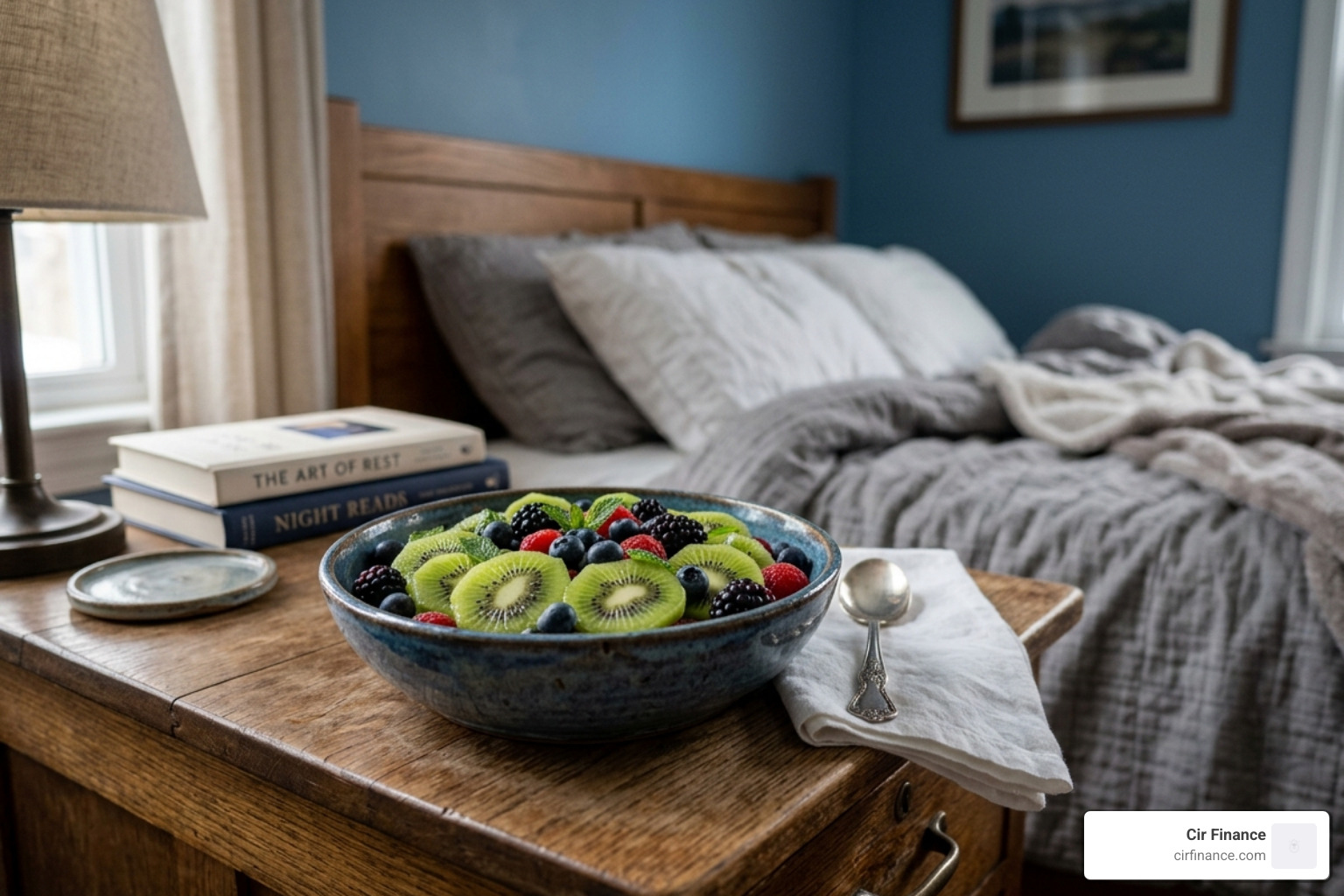
When picking your bedtime snack, portion control still matters. Even healthy foods have calories! Aiming for a snack under 200 calories is the sweet spot for nighttime weight loss. More info about nutrition routines can help you build these habits into a sustainable lifestyle.
1. Why Kiwi is the Best Fruit to Eat Before Bed to Lose Weight
If we had to crown a winner, the kiwi might just take the trophy. Two medium kiwis contain about 84 calories and a whopping 4 grams of fiber. But the weight loss benefits go beyond just calories.
Kiwi is unique because it contains actinidin, an enzyme that aids in the digestion of proteins. Better digestion means less bloating and a more comfortable night’s rest. More importantly, kiwis are rich in serotonin precursors. Serotonin is a brain chemical that makes us feel relaxed and happy, and our bodies eventually convert it into melatonin, the hormone that tells us it’s time to sleep.
In fact, some studies have shown that eating two kiwis an hour before bed can help people fall asleep faster and stay asleep longer. When you sleep better, your body is better at regulating the hormones that control hunger the next day. For more on how food affects your rest, check out this Scientific research on kiwi and sleep quality.
2. Tart Cherries: Natural Melatonin for Fat Burning
Tart cherries (specifically the Montmorency variety) are a powerhouse for anyone looking to slim down while they snooze. An 8-ounce glass of tart cherry juice is around 159 calories, but it’s packed with anthocyanins—antioxidants that give cherries their deep red color and help reduce muscle soreness and inflammation.
The real secret weapon here is natural melatonin. By boosting your melatonin levels, tart cherries help regulate your sleep-wake cycle. Why does this matter for weight loss? High levels of the stress hormone cortisol are linked to belly fat. Quality sleep, supported by cherries, helps lower cortisol levels and keeps your metabolic rate steady.
3. Berries: Low-Glycemic Antioxidant Boosters
Berries—including blueberries, strawberries, and raspberries—are the ultimate “volume” food. You can eat a whole cup of strawberries for only 53 calories! They are low on the glycemic index, meaning they won’t cause your insulin to go on a roller coaster ride while you’re trying to rest.
Berries are loaded with polyphenols, which have been shown to improve insulin stability and help the body process fats more efficiently. Whether you choose fresh or frozen (frozen berries are often picked at peak ripeness and are just as nutritious), they provide a sweet fix that satisfies cravings while providing the fiber needed for overnight satiety.
4. Grapefruit: The Metabolism Catalyst
Grapefruit has long been associated with weight loss, and for good reason. At only 69 calories per cup, it is incredibly hydrating and contains an antioxidant called naringenin. Research suggests that naringenin may help your body use insulin more effectively, keeping blood sugar levels in check and suppressing appetite.
Eating grapefruit before bed can act as a metabolism catalyst, helping your body process energy more efficiently. However, be cautious: grapefruit can interact with certain medications, so always check with your doctor before making it a nightly staple.
5. Watermelon: High Volume, Low Calorie
If you’re the type of person who needs a large snack to feel satisfied, watermelon is your best friend. A 100-gram serving contains only 30 calories because it is 90% water.
Watermelon contains an amino acid called L-citrulline, which may help improve circulation and reduce muscle fatigue. This makes it a great choice if you’ve had a tough workout earlier in the day. By filling up on the high volume of watermelon, you can stop late-night hunger pangs in their tracks without adding a significant calorie load to your daily total.
6. Apples: Pectin for Overnight Satiety
The old saying “an apple a day” holds true for weight loss, especially at night. A medium apple is about 95 calories and provides a specific type of soluble fiber called pectin.
Pectin turns into a gel-like substance in your gut, which slows down digestion and helps regulate blood sugar. This prevents you from waking up in the middle of the night with a “hunger headache.” Additionally, the act of chewing a crunchy apple provides psychological satisfaction that can signal to your brain that the day’s eating is done.
7. Bananas: Resistant Starch and Relaxation
Bananas sometimes get a bad rap for being “high sugar,” but they are actually a fantastic bedtime snack when eaten in moderation. One medium banana has about 105 calories and 3 grams of fiber.
Bananas are rich in magnesium and potassium, minerals that act as natural muscle relaxants. They also contain resistant starch, a type of carbohydrate that fuels healthy gut bacteria and may improve fat oxidation. The vitamin B6 in bananas helps convert tryptophan into serotonin, making it easier to drift off into a fat-burning slumber.
How Better Sleep Leads to a Slimmer Waistline
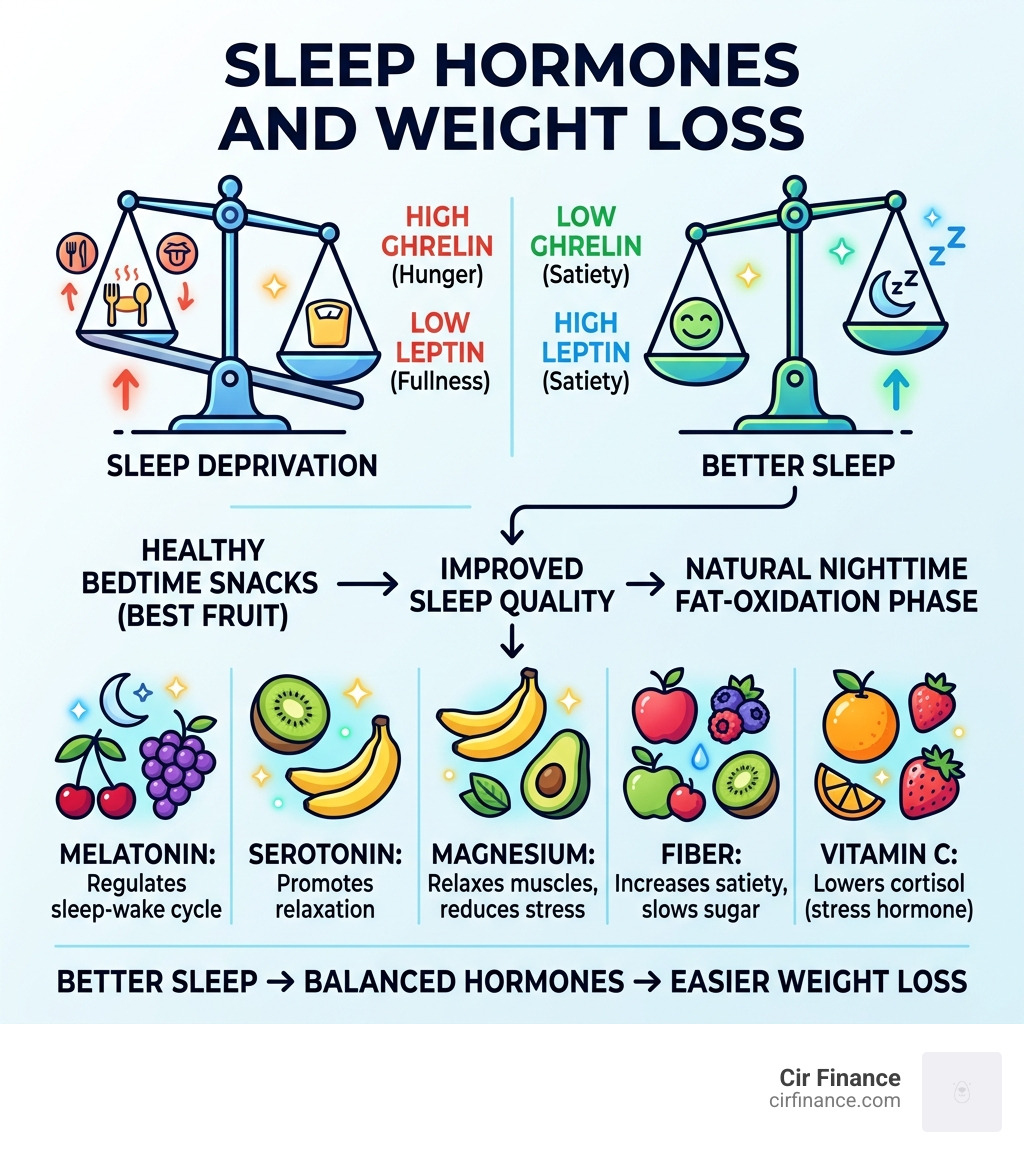
We cannot overstate this: sleep is a pillar of weight loss. When you are sleep-deprived, your body produces more ghrelin (the “I’m hungry” hormone) and less leptin (the “I’m full” hormone). This is why you crave donuts and bagels after a bad night’s sleep.
By eating the best fruit to eat before bed to lose weight, you are essentially “hacking” your hormones. The nutrients in these fruits promote deeper, non-fragmented sleep, which allows your body to enter its natural nighttime fat-oxidation phase.
| Nutrient | Benefit for Weight Loss | Best Fruit Sources |
|---|---|---|
| Melatonin | Regulates sleep-wake cycle | Tart cherries, Grapes |
| Serotonin | Promotes relaxation | Kiwi, Bananas |
| Magnesium | Relaxes muscles, reduces stress | Bananas, Avocados |
| Fiber | Increases satiety, slows sugar | Apples, Berries, Kiwi |
| Vitamin C | Lowers cortisol (stress hormone) | Oranges, Strawberries |
How to Choose the Best Fruit to Eat Before Bed to Lose Weight for Your Goals
Not everyone’s body reacts the same way to fruit. If you have sensitive blood sugar, pairing your fruit with a small amount of protein or healthy fat can be a game-changer. For example, try dipping your apple slices in a tablespoon of unsweetened almond butter or adding berries to a small bowl of plain Greek yogurt.
This combination of fiber and protein creates a “slow-release” energy effect, keeping your blood sugar stable all night. Remember the golden rule: keep the total snack under 200 calories to ensure you stay in a calorie deficit.

Fruits to Consume with Caution
While fruit is healthy, some can be disruptive if eaten too close to bedtime. High-sugar fruits like mangoes and grapes are delicious but can cause a quick energy spike in some people, making it harder to fall asleep.
Also, be mindful of acid reflux. Citrus fruits like oranges and grapefruits are acidic and can cause heartburn if you lie down immediately after eating them. If you have a sensitive stomach, stick to kiwis or bananas, which are generally easier on the digestive tract. For more tips on optimizing your sleep environment and habits, visit our More info about bedroom health tips.
Debunking Myths About Nighttime Fruit Consumption
- Myth: “Fruit turns to fat if you eat it at night.”
- Truth: Your body doesn’t have a “fat-making switch” that flips at 8:00 PM. Weight loss is determined by your total calorie balance and metabolic health.
- Myth: “The sugar in fruit will keep you awake.”
- Truth: The fiber in whole fruit prevents the “sugar high” associated with candy. In fact, the micronutrients in fruit often help you sleep better.
- Myth: “Fruit ferments in your stomach if you sleep.”
- Truth: Your digestive system continues to work while you sleep. While some fermentable carbs (FODMAPs) can cause gas in sensitive individuals, fruit does not “rot” in your stomach.
Frequently Asked Questions about Bedtime Fruits
Which fruit burns the most fat while you sleep?
While no fruit literally “melts” fat, grapefruit and kiwi are top contenders. Grapefruit helps manage insulin levels, while kiwi improves sleep quality, which is essential for the body’s natural fat-burning processes.
Is it okay to eat fruit right before lying down?
For most people, yes. However, if you suffer from acid reflux, we recommend eating your fruit at least 2–3 hours before bed to allow for proper digestion.
How much fruit should I eat for a bedtime snack?
A single serving is usually best. This looks like one medium apple, one banana, two kiwis, or one cup of berries. Keeping the portion to roughly the size of your fist ensures you stay within a healthy calorie range.
Conclusion
At Cir Finance, we believe that small, sustainable changes lead to the biggest results. Choosing the best fruit to eat before bed to lose weight is a simple way to satisfy your sweet tooth, improve your sleep, and support your April 2026 wellness goals.
By swapping out heavy, processed snacks for nutrient-dense fruits like kiwi, tart cherries, and berries, you’re not just eating—you’re fueling your body for a healthier tomorrow. For more practical advice on gadgets, nutrition, and lifestyle improvements, explore our More info about healthy lifestyle services. Sweet dreams!
